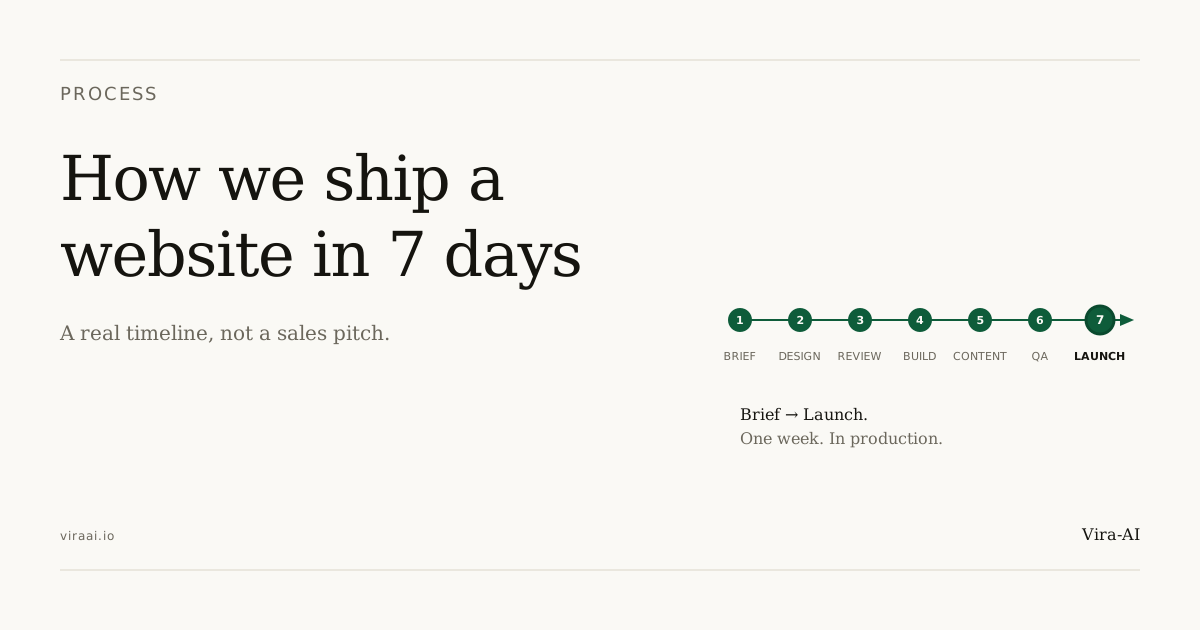
Seven days sounds aggressive for a custom website, and it would be if we were starting from a blank page on day one. The process works because most of the structure is already built: the design system, the technical foundations, the accessibility patterns, the SEO scaffolding. The seven days are spent on the part that has to be yours: your business, your copy, your photos, your pages.
The project was a physiotherapy clinic outside Toronto. Five pages, booking integration with Acuity, photos the owner shot on her phone. From kickoff to launch, it took seven calendar days, and three of those were spent waiting on her.
Day 0: kickoff call + content collection
Before the seven-day clock starts, we hold a kickoff call. Forty-five minutes: what the business does, who the patients are, what the site needs to do. We walked through what we needed from her: logo file, photos of the clinic and team, copy draft if she had one, and the domain name.
For this project, she had everything except the photos. We sent a short photo brief: front of clinic, treatment room, two team shots, three to five action shots of treatments in progress. Time on our end: about thirty minutes for the call and follow-up email.
7 day web design launch process: Copy and layout
We write the copy first, design follows. If you came to us with a draft, we refine it for clarity and conversion. If you didn't, we write it from scratch based on the kickoff notes, and you see a draft to react to before the design work locks anything in. The reason: rewriting copy on a finished design costs twice as much as rewriting copy on a document.
For the physio clinic, the owner had a draft of the homepage that was good but generic. We rewrote it to lead with the specific services she wanted more of (post-surgical rehab and chronic pain), not the generic "we treat all conditions" angle. Time spent: about four hours of writing and review, plus another two hours on the design mockup.
Days 3–4: build
The build uses custom static, Tailwind, and the same accessibility and structured-data foundations every Vira-AI site ships with. That means semantic HTML, WCAG 2.2 AA by default, JSON-LD for SEO, and a content layer the owner can edit without a developer.
Booking integrations, contact forms, analytics, and any third-party widgets get wired in here. By the end of day four the clinic had a working site on a preview URL: the same experience visitors would see at launch. Time on our end: around 12–14 hours across the two days, spread between the two people working on the project.
Day 5: her review
One consolidated round of feedback, not micro-revisions in real time. The reason: small tweaks scattered across a week push the 7 day web design launch process timeline out and fragment the focus of the team building the site. A single thoughtful review on day five produces a better site, faster, than fifty chat messages across days three through five.
She got the preview URL on Tuesday morning with a short checklist of what to look at: mobile view, booking flow, contact form, accessibility tab-through. Her feedback came back Wednesday morning: one structural request (move the testimonials higher on the homepage), two copy tweaks, and a request to swap two photos. Time spent on her end: maybe forty minutes.
Day 6: revisions + audit
We applied her feedback, ran the full accessibility and performance audit, and tested the site across Chrome, Safari, Firefox, and a handful of mobile devices. Any issues get fixed before launch, not after. If anything falls short of our launch bar, it doesn't ship that day.
The audit caught one contrast issue on a button hover state that we'd missed in the design. Twenty minutes to fix. Everything else passed. Lighthouse performance came back at 98.
Day 7: launch
DNS cutover, hosting setup, redirect map if you're replacing an old site, sitemap submission to Google, and a final end-to-end smoke test of every form and link. The site went live at 11am. We handed off everything: code repo, content logins, domain credentials. She owns all of it.
The delays that almost happened
Three things went sideways on this project:
- The domain was on an older registrar that took 36 hours to release the transfer. We started the transfer request on day zero for exactly this reason.
- The clinic's Acuity account had a calendar sync conflict we hadn't seen before: about an hour on day four to resolve.
- She was late with the photos. Day five slipped to day six, day six slipped to day seven, and the launch held at seven days only because we'd built in a buffer.
None of these extended the price or the final launch date. The buffer absorbed them. Some projects take nine or ten days because content keeps moving, and we keep working with no extra fees when it does.
Fast Custom Website Launch: Preparation Checklist
If you want a site shipped in seven days, here's what helps most:
- Logo file: vector (SVG or AI) if you have it, high-res PNG if you don't. We can clean up a PNG in a pinch.
- Photos: real photos of your actual space and team. Phone photos are fine; just shoot in good light and keep them horizontal.
- Copy draft: even a rough one. It saves us 4–6 hours of writing time we can put into the build.
- Domain login: to your registrar (GoDaddy, Namecheap, Cloudflare). Transfer access takes 24–48 hours, so the sooner we have it the better.
- One decision-maker: the person who can approve copy and design quickly. The bottleneck on slow builds is almost always decision latency, not design or engineering.
- Content assets: any booking links, custom widgets, or testimonials you want integrated.
If you don't have any of this ready, we can still build, it just takes longer and the price is the same. See the full $2,999 pricing breakdown, learn who's on the build team, or start the conversation when you're ready.