A bakery owner sent us two quotes last month: $2,500 from a freelancer and $14,000 from a "full-service agency," plus a Squarespace ad running in her inbox. Her question was the one every owner asks: is the higher number fair, or is the lower number too good to be true?
The honest answer: most prices online are either anchor pricing or stale. Here's what a small business website actually costs in 2026, what you get at each tier, and what most providers quietly leave out.
What we mean by "small business website" in 2026
The kind of site most owner-operated companies need: five to twenty-five pages, built to generate leads or sell a handful of products, written in clear language, accessible to anyone who lands on it. A bakery wanting a contact form and a menu page. A dentist needing online booking. A law firm wanting intake forms, not a content platform.
That's most of what we build, and the scope this article is written against. If you're shopping for a SaaS marketing site with a fifty-page resource hub, the numbers below won't apply, as you're in a different category, and the price usually goes up.
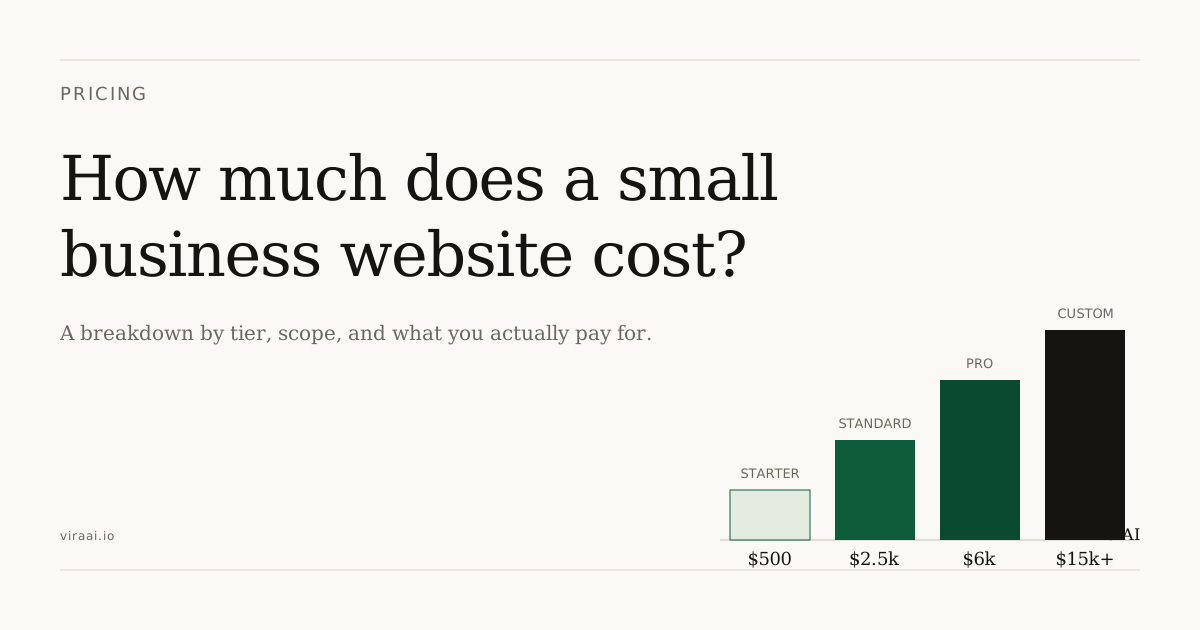
The four honest pricing tiers
Most small business websites fall into one of four tiers. The numbers below are common ranges from the projects we've seen in the last twelve months; your quote may land higher or lower depending on complexity, content readiness, and the provider's overhead.
DIY builders: $0 to $500
Wix, Squarespace, and similar platforms let you publish a working site for the cost of the subscription and your own time. We've seen owners ship perfectly serviceable one-page sites this way. This tier makes sense if you enjoy building, you have time to learn the editor, and your business doesn't depend on the site being a polished sales tool.
The trade-off is your time. A site that takes forty hours to build is a $2,000 site before you've paid a subscription. For a busy owner, that time is often the most expensive thing on the menu.
DIY with paid tools: $500 to $1,500
This is where DIY gets interesting, and where it also gets expensive in ways people don't see. You build on a better platform, hire a copywriter for the words ($300–$800 for five pages), buy a premium theme ($80–$200), and pay a designer to adjust the layout ($200–$500). You can get a credible result at this tier, especially if your business is simple. It still costs you time, and you own the integration risk between the tools.
Freelancer: $1,500 to $5,000
A good freelancer handles design, build, and often some of the copy. You get more polish than DIY, fewer layers than an agency, and a more direct relationship with the person doing the work. Across the projects we've shipped alongside freelancers (or, full disclosure, when we were freelancers ourselves), most land in the $2,000–$3,500 range for a five-to-ten-page small business site.
The honest caveat: quality varies, timelines depend on one person's schedule, and what you don't pay for (project management, QA, content strategy) often falls on you.
Agency: $5,000 to $25,000+
A traditional agency delivers strategy, design, content, build, and project management, billing accordingly. The work is often excellent. The price pays for the office, the account managers, the discovery decks, and usually a junior team doing the actual building.
For most small businesses, this is a lot more than the project actually needs. We've had clients come to us after a $12,000 agency engagement delivered a Wix site with placeholder copy. That happens more than agencies care to admit.
The hidden costs most quotes leave out
Whatever tier you choose, watch for the line items that tend to show up after the contract is signed:
- Revision rounds beyond the agreed scope. "Unlimited revisions" almost always means "rounds 1 and 2, then we start charging."
- Hosting, domain, and SSL renewals, often billed annually at $100–$400/year.
- Premium plugins or themes that quietly require subscriptions ($50–$300/year).
- Ongoing maintenance, security updates, and content edits ($50–$200/month if outsourced).
- Stock photography, fonts, or icon sets that aren't included in the quote.
- Accessibility remediation after the fact, which can run $1,500–$5,000 if the site was built without it.
None of these are tricks. They're easy to miss when you're comparing headline prices. Always ask for the total cost of ownership across the first year, not just the build price. The build is rarely where the money goes.
Where Vira-AI sits
Vira-AI is a freelancer-tier team with agency-grade quality and a flat fee of $2,999. That covers design, copy, branding, technical and local SEO, accessibility, and hosting setup. You own everything: the code, the content, and the domain.
We built the model because small business owners kept telling us the same story: hourly was unpredictable, agency was unaffordable, and DIY was eating their week.
Four questions to ask before you sign
- What does the total cost look like after year one? Add hosting, plugins, and any required maintenance to the build price.
- Who is doing the actual work? The senior people in the pitch may not be the ones writing your code.
- Do I own the code, the design files, and the domain? Get it in writing before you pay the deposit.
- What happens if the project runs late? Most contracts don't say. Ours keeps us working for free until you're live.
See the full $2,999 pricing breakdown, look through our recent portfolio to see what ships at that price, or send us a quick note: we'll tell you whether we're the right fit, even if that means pointing you somewhere else.